 Palm Desert Golf Cart Repair

Golf carts in the Coachella Valley do not lead easy lives. Summer afternoons that can pass 115 degrees, a cart garage hotter still, blowing dust that finds its way into every brake drum and battery terminal, and for a great many carts, five months sitting untouched while their owners are somewhere cooler.
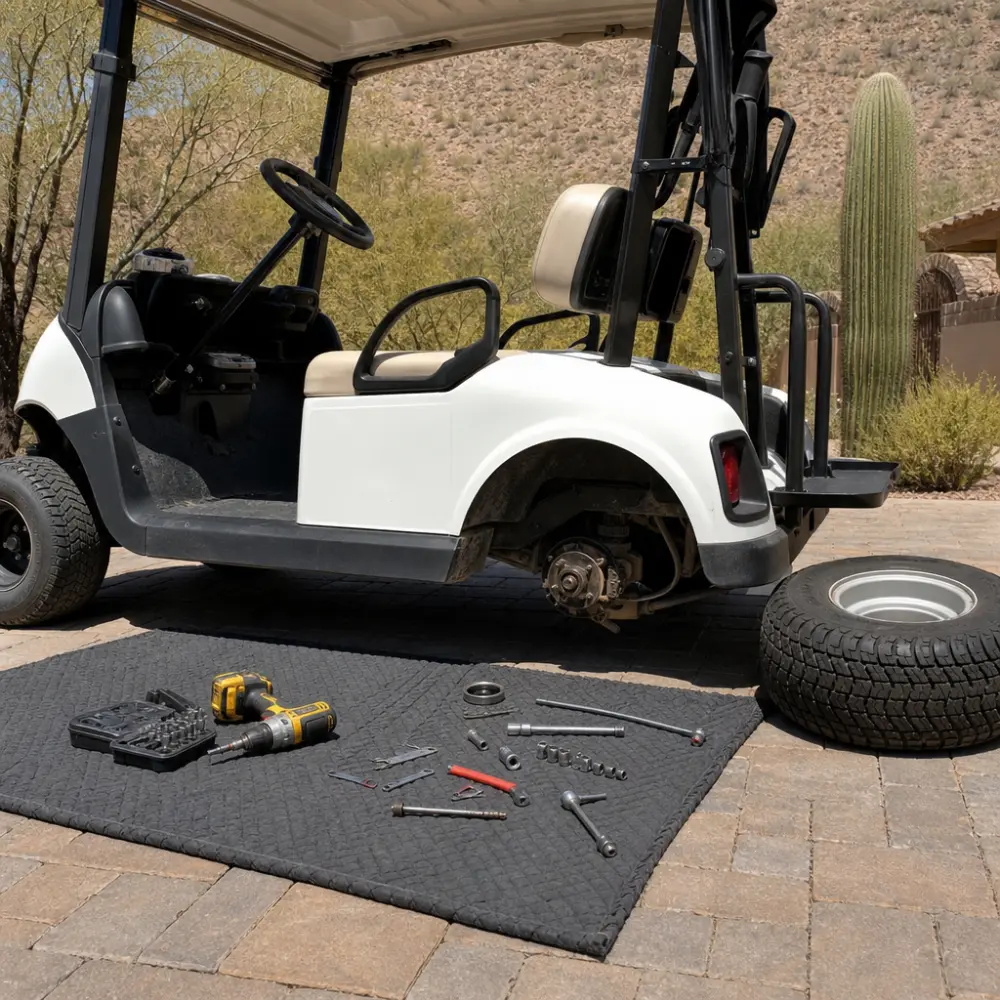
They get fixed where they sit. A mobile tech comes to your driveway, your cart garage, or your space in a gated community, commonly carrying batteries, solenoids, brake parts, and tires, and most jobs can be finished in one visit.
What is published here, and why
Every price we publish is a real range and it is on the pricing page rather than behind a form:
| Work | Price |
|---|---|
| Service call and full diagnostic | $50–$100, usually applied toward the repair |
| Lead-acid battery pack, installed | $1,200–$1,800 |
| Lithium conversion | $1,600–$3,500 |
| Solenoid | $100–$250 |
| Speed controller | $300–$600 |
| Motor repair or replacement | $300–$1,000 |
| Charge port or minor charger repair | $100–$300 |
| Charger replacement | $300–$800 |
| Brake adjustment | ~$75 |
| Brake shoes and drums | $100–$250 per axle |
| Tires, installed | $75–$150 each, $300–$600 a set |
| Annual tune-up, electric | $100–$200 |
Nobody in this trade publishes numbers, which is why searching for what a cart repair costs usually ends at a contact form. The repair calculator and the battery calculator put the answer on the page with no email.
The diagnosis comes before the parts
This matters more than anything else on this page, because the most expensive mistake in cart ownership is buying a battery pack you did not need.
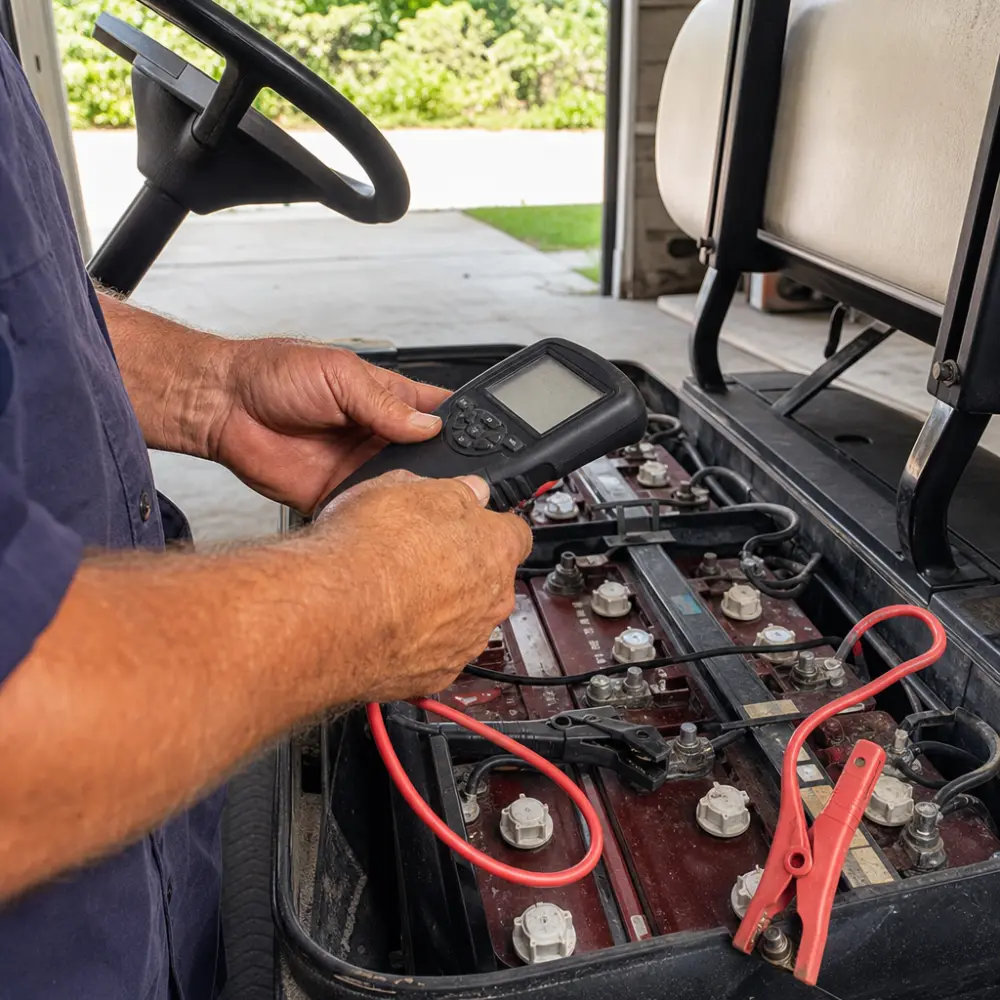
Every visit starts the same way: each battery load tested individually, pack voltage under load, charger output tested, charge port inspected, solenoid checked before controller, and a roll test to find a dragging brake. Six numbers rather than one.
A common pattern is a cart whose owner had been quoted a full set of batteries and the actual fault was a $150 charge port, a $175 solenoid, or a $75 brake adjustment. That order is the whole reason to hire someone with a meter rather than someone with a van full of batteries.
What the desert does to a cart
Heat kills packs. Flooded lead-acid batteries lose electrolyte to evaporation, and once plates are exposed that capacity is gone permanently. Water every two to four weeks through the summer, distilled water only, after charging. This single habit is the difference between three years and six.
The summer sit is worse than the summer. A pack left at partial charge in a 120-degree garage for five months sulphates, and self-discharge roughly doubles for every eighteen degrees of temperature rise. If the cart will sit, leave it on a maintaining charger, or charge it fully and have somebody check it monthly. The sat all summer page covers what comes back and what does not.
Dust is abrasive. Blowing valley sand works into brake drums, motor housings, and the battery bay, where it holds moisture against terminals and builds the resistance that produces most cut-out and no-start faults.
Tires age out before they wear out. Desert sun cracks sidewalls on a tire with most of its tread left. Check the sidewalls, not the tread.
Where we work
Palm Desert and across the valley: Sun City Palm Desert, Indian Wells, La Quinta, Rancho Mirage, and Indio. Gated communities are common; include the gate name and your address when you book.
Start here
Run the settling of what is actually wrong first. Every problem page begins with a ten-minute check you can do yourself, and several of them end with you finding a tow switch in the wrong position or a brake that is dragging. Better you find it first.
If it is beyond that, the calculators will tell you the range before you call, and the service call usually comes off the bill when you approve the work.